
Gin Rummy King
SATORISYS PLAYCard
4.7552.00 Reviews
- Version
- 1.2.1
- Installs
- 100.00K
- Age Rating
- Teen
Screenshots
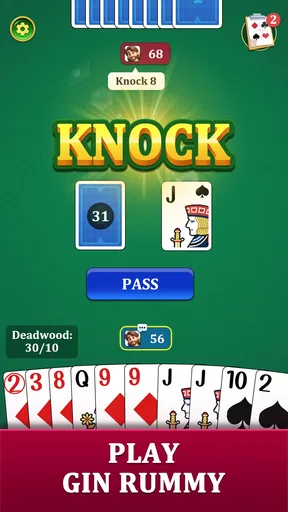
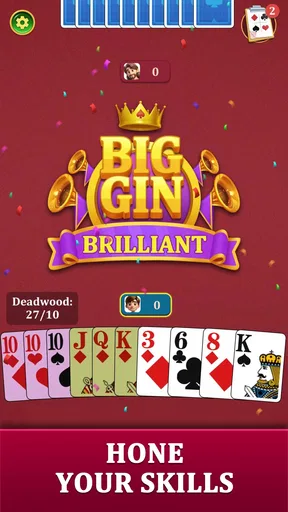
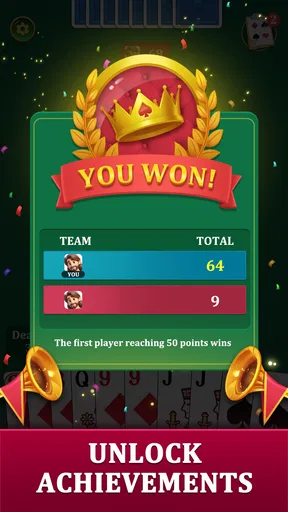
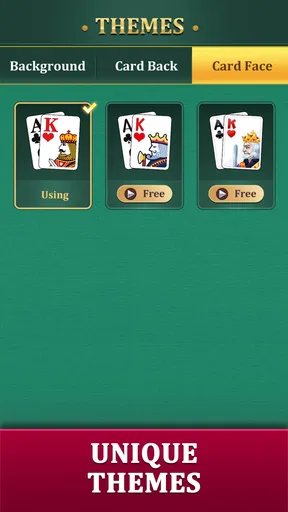
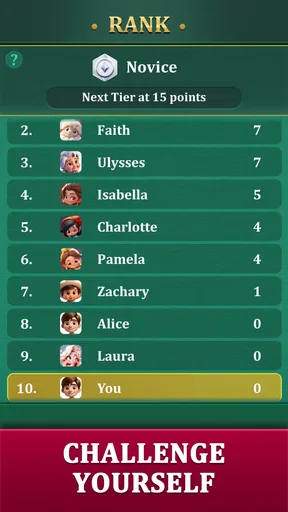
Our Review of Gin Rummy King
 Analysis by Appyee
I spent time with Gin Rummy King as a focused card game rather than treating it like something to tap through for a few spare seconds. That distinction matters. Gin rummy is built around small decisions: which cards to keep, which combinations to pursue, and when to stop collecting information and commit to a hand. This version from SATORISYS PLAY keeps the attention on that familiar loop, so its appeal comes less from spectacle and more from the satisfaction of reading a hand correctly.
The game is free, carries a Teen content rating, and runs on Android 7.1 or later. That makes it accessible to people using older devices, while the current version, 1.2.1, suggests a fairly compact product rather than a huge card-game platform. I would recommend it first to anyone who already enjoys gin rummy or wants a more deliberate alternative to fast, luck-heavy card games. I would be more cautious with players who need constant visual variety, a broad collection of modes, or an obvious reward trail after every round.
How the first few games establish the rhythm
The early goal is refreshingly clear: build useful groups and runs while reducing the unmatched cards in your hand. I did not need a long explanation to understand what I was trying to achieve. That clarity is one of the strongest qualities here, because a card game can lose people quickly when its rules are hidden behind menus or overloaded tutorials.
My first useful habit was to stop treating every pair as equally valuable. Two cards that look promising can become a trap if they force me to hold several unrelated cards while waiting for one exact draw. A better approach is to keep flexible combinations for as long as possible and watch what the opponent appears to reject. That turns each discard into information instead of merely removing a card from my own hand.
There is also a nice tension between making a hand tidy and keeping options open. If I organize too aggressively around one run, a poor draw can leave me with little room to adapt. If I refuse to commit, I may finish with too many unmatched cards. The opening games teach this naturally. I began by chasing obvious combinations, then gradually learned to value cards that could serve more than one purpose.
That makes the game suitable for short sessions, but not necessarily mindless sessions. A round can fit into a break, yet I still found myself wanting enough concentration to remember discarded cards and estimate what might remain useful. If you are playing while constantly switching between messages or other tasks, the experience loses some of its appeal. The game rewards attention more than rapid tapping.
What progress feels like between rounds
The most convincing progress signal is not a flashy unlock or a dramatic change in presentation. It is the improvement in my own decisions. I started noticing when I was holding a card simply because I liked its apparent potential, even though it was making the rest of the hand worse. Learning to release that card earlier felt more meaningful than any decorative reward would have been.
Players who prefer visible milestones may find this understated. The game’s natural feedback comes from better timing, fewer careless discards, and a clearer sense of when a hand is worth closing. That is a good fit for traditional card-game fans, but it can feel modest if you expect a progression system to constantly announce achievements.
A practical way to measure improvement is to review the moment a hand went wrong. Instead of blaming an unlucky draw, I ask whether I held a weak card too long, revealed my plan too early, or ignored the opponent’s discards. This self-review gives the game more depth than its simple presentation initially suggests. It also prevents the common mistake of assuming that every loss was unavoidable.
For a new player, I suggest setting a small personal target for a session: make fewer speculative holds, remember one more discarded card, or decide earlier whether a hand is worth pursuing. These goals are more useful than trying to win every round immediately. They create a sense of direction even when the game itself keeps the presentation restrained.
The difficulty curve rewards patience more than speed
Gin rummy can feel easy when the cards cooperate and surprisingly demanding when they do not. The challenge comes from managing imperfect information, not from complicated controls. I found the difficulty most interesting when I had to choose between a safe discard and a risky one that might improve my hand. The right choice depends on both my own combinations and the possibility that I am helping the opponent.
That creates a gradual learning curve without requiring complicated rules. At first, I focused almost entirely on my hand. Later, I began asking what my discard communicated and what the opponent’s choices might reveal. This second layer is where the game becomes more engaging. It is also where casual players may feel a little friction, because improvement requires observation rather than simply playing more quickly.
The game is not the best choice for someone looking for instant, low-effort entertainment. A match-three game or a very simple solitaire variant may be more relaxing when I want activity without calculation. Here, even a familiar hand can demand several decisions in sequence. That is a strength for strategic players, but a limitation for anyone who dislikes losing because of a subtle judgment call.
I also noticed that patience matters more than chasing dramatic turns. Holding a card for one more draw can be correct, but only when the rest of the hand remains flexible. The useful question is not “Can this card complete something?” but “How many reasonable ways can this card still help?” That small change in thinking improved my play more than memorizing isolated rules.
Where the pacing works and where it may feel thin
The pacing is built around repeated hands rather than a large adventure structure. That keeps the focus clean: deal, assess, discard, draw, and decide whether the hand is ready to close. I like that economy because it lets me play one round without committing to a long campaign. It also makes the game easy to return to after a day away.
At the same time, a compact loop can become repetitive if I need a strong sense of destination. The game’s retention comes from wanting to make a better decision next time, not from a story, collection chase, or elaborate world. I would not install it expecting a steady stream of new content or a constantly changing set of objectives. Its appeal depends on whether the underlying card decisions are enough to carry repeated sessions for you.
The free price lowers the barrier to trying it, which is useful for players who are unsure whether gin rummy suits them. It also means I can approach the game casually instead of feeling that I must justify a purchase. Still, free access alone does not solve the central question: do I enjoy repeating a thoughtful card loop? If the answer is no, the low cost will not make the pacing feel richer.
For everyday use, I can imagine opening it during a commute, while waiting for an appointment, or at home when I want something quieter than a competitive action game. My best sessions were the ones where I played a few hands with a specific focus, such as improving my discards. Playing indefinitely without that small objective made the loop feel flatter.
Who will enjoy the challenge, and who should skip it
I think this is a good match for traditional card players, people returning to gin rummy after a long break, and anyone who enjoys games where experience changes how the same rules feel. It is also approachable for a friend who wants to learn through practice rather than read a long manual. The basic objective is understandable, while the decisions become more nuanced with familiarity.
I would skip it if I wanted a narrative campaign, a broad social hub, or a visually elaborate card battler. I would also look elsewhere if my main priority were collecting characters, unlocking a large library of themed content, or receiving constant progression rewards. Nothing about the core experience suggests that those expectations should guide a download decision.
The Teen rating is worth keeping in mind for families choosing games for younger children. Even though the activity is a card game, the listed age guidance means I would not assume it is intended for every child. For an adult or older teen who understands the rules of gin rummy, the rating is less likely to affect the decision, but parents should still check the store page on the device before handing it over.
The audience question also depends on tolerance for quiet presentation. Some players enjoy a clean table and direct decisions because they can concentrate. Others need sound, animation, and frequent rewards to stay engaged. I fall between those groups: I appreciate the uncluttered card focus, but I would not choose this as my only game if I wanted variety throughout the week.
Small decisions that make a noticeable difference
My first concrete tip is to separate a genuinely flexible card from a card that merely looks promising. A middle card may connect to several possible runs, while a high or low card may depend on one narrow outcome. Keeping flexibility gives me more ways to recover after an awkward draw. This is especially helpful early in a hand, when I still have time to see what the discard pile is telling me.
Second, I try not to reveal my preferred pattern too quickly. Discarding a card that obviously belongs beside another can give the opponent useful information. Sometimes the best discard is not the card with the lowest immediate value, but the one that tells the least about my plan while preserving a reasonable chance of improvement.
Third, I use the opponent’s discards as a warning rather than a complete answer. If a card appears safe because it was rejected, I still consider whether it could complete a different combination for them. One discarded card is a clue, not proof. This prevents me from copying a simplistic strategy and keeps the game’s uncertainty intact.
Finally, I decide in advance what would make me abandon a weak plan. Without that limit, it is easy to keep holding a troublesome card because the next draw might rescue it. Setting a mental cutoff helps me protect the rest of the hand. This is one of the most transferable lessons in the game: a flexible imperfect hand is often better than a beautiful idea that never arrives.
How it compares with familiar card-game alternatives
Compared with solitaire, this game asks me to think more about another player’s possible hand. Solitaire is often better when I want a solitary puzzle with a predictable structure, while gin rummy is more satisfying when I want uncertainty and deduction. The trade-off is that gin rummy can feel less calming because my choices are judged against an opponent rather than only against the layout.
Compared with fast collectible card games, the attraction here is restraint. I am not relying on a deck built around special abilities or a large collection of cards. The challenge comes from ordinary cards and the timing of decisions. That makes the game easier to understand, but it also means players who enjoy deck construction or dramatic effects may find the experience too narrow.
Compared with casual casino-style card apps, the emphasis feels more thoughtful than purely luck-driven. I still depend on the deal, but I have more room to improve through memory, risk management, and reading discards. Players who want a quick result every few seconds may prefer a simpler alternative. Players who enjoy examining why a hand succeeded or failed will likely get more from this format.
The developer, SATORISYS PLAY, has kept the identity of the game centered on its named card format rather than trying to make it serve every possible card-game audience. That focus is valuable. It means I can understand what I am downloading quickly, although it also leaves less room for someone who wants a multi-game card collection in one app.
What the community response suggests about its appeal
The game has an average rating of 4.7 from around 8,100 ratings, with roughly 437 written reviews and over 100,000 installs. Those figures indicate that it has attracted a meaningful audience and that the general reaction is strongly positive. I would treat that as encouragement rather than a guarantee, because card-game preferences are unusually personal.
What matters more to me is whether the positive response matches the actual type of satisfaction the game offers. If someone enjoys the rules of gin rummy, the focused loop has a solid chance of working. If someone downloaded it expecting a large progression system, the same simplicity may be interpreted as a weakness. The rating is useful context, but it should not replace understanding the game’s narrow purpose.
My verdict on goals, pacing, and long-term pull
Gin Rummy King succeeds when I approach it as a compact strategy card game with room for personal improvement. Its early goals are easy to grasp, its challenge grows through better observation, and its pacing suits short, repeatable sessions. The progression is mostly internal: I become less wasteful, more patient, and better at recognizing when a hand is worth pursuing.
That is also the main limitation. Players who need explicit unlocks, varied challenges, or a strong reward ladder may feel that the game does not provide enough visible momentum. I would not call that a flaw in the rules themselves; it is a question of fit. The game asks whether the act of making smarter card decisions can sustain interest on its own.
For me, the answer is yes, within limits. I like having a free, accessible way to return to gin rummy without the noise of a more elaborate card platform. I would recommend it to a friend who enjoys quiet competition and wants a game that can be played in short bursts but still rewards careful thought. I would steer someone seeking constant novelty toward a different genre.
My bottom line is simple: choose it for the quality of the card decisions, not for a large unlock chase. If that sounds appealing, the straightforward rules and flexible session length make it easy to try. If your ideal mobile game needs dramatic progression, deep customization, or a steady stream of new systems, this focused approach will probably feel too restrained.
Privacy and Permissions
See what permissions an app requests and how it handles your data.
- Wi-Fi connection information
- view Wi-Fi connections
- Other
- view network connections, full network access, control vibration, prevent device from sleeping, Google Play license check
Verdict
Strengths of Gin Rummy King
- Simple rules make it easy for beginners to start playing.
- Quick matches fit well into short breaks or commutes.
- Offline play is useful when you have no internet connection.
- Different opponents provide a gradual increase in challenge.
- Clean card-focused design keeps the gameplay easy to follow.
Limitations of Gin Rummy King
- Limited strategic depth may disappoint experienced rummy players.
- Computer opponents can sometimes feel predictable.
- Ads may interrupt the experience, depending on the version.
- Progression can become repetitive after extended play sessions.
- Some features may require purchases or an internet connection.
Other Releases by SATORISYS PLAY
View All
Ball Sort - Color Puzzle Game
Casual4.7

Line Dash
Casual4.7

Gin Rummy Classic
Card4.6

Word Connect Master
Word4.6
Similar Picks in This Category
View All
Solitaire - Classic Card Games
MobilityWare4.6

UNO!™
Mattel163 Limited4.3

Spider Solitaire: Card Games
MobilityWare4.6

Solitaire.com - Classic Cards
Tripledot Studios Limited4.7

Plants vs. Zombies™ Heroes
ELECTRONIC ARTS4.1

Hearthstone
Blizzard Entertainment, Inc.4.1
Frequently Asked Questions
What is Gin Rummy King, and how is the game played?
Gin Rummy King is a digital version of the classic Gin Rummy card game, designed for players who enjoy forming sets and runs while trying to reduce the value of unmatched cards. During a round, you draw and discard cards to improve your hand, then knock or go gin when your cards meet the required conditions. The app generally focuses on quick matches, simple controls, and traditional scoring rules.
Can I play Gin Rummy King offline without an internet connection?
Offline availability may depend on the specific version and platform you download. Some versions of Gin Rummy King include single-player or practice modes that can be played without a constant connection, while online competitions, advertisements, leaderboards, and account-related features usually require internet access. It is best to check the app-store description and test the practice mode before relying on it during travel.
Is Gin Rummy King free to download and play?
Gin Rummy King may be free to download, but free access does not always mean that every feature is completely unrestricted. The game can include advertisements, optional purchases, virtual currency, extra game modes, or other in-app items. Before installing, review the current store listing for pricing details, supported purchases, and any subscription information, since these conditions can change with future updates.
Does Gin Rummy King offer multiplayer games against real players?
Depending on the edition available for your device, Gin Rummy King may provide matches against computer-controlled opponents, online multiplayer, or both. Multiplayer features commonly require an internet connection and can include matchmaking, rankings, invitations, or competitive events. If playing against real opponents is important to you, confirm that the current Android or iOS listing specifically mentions online multiplayer before downloading.
Is Gin Rummy King suitable for beginners, and are there privacy concerns?
Gin Rummy King can be suitable for beginners because the basic gameplay is easy to understand, especially when the app provides clear instructions, tutorials, or a practice mode. New players should still learn how knocking, going gin, undercutting, and scoring work. Also review the app’s permissions and privacy policy, particularly if it requests account information, advertising identifiers, or access to personal data.
Play our best games!


